 Skyline Comfort Services
An AC that runs but blows warm air almost always traces to one of a handful of causes: a dirty filter, a refrigerant leak, a clogged condensate drain, a frozen or dirty coil, or a thermostat or electrical fault. Because several of these look alike, an accurate diagnosis matters before any parts get replaced.
There are few HVAC problems more frustrating than an air conditioner that appears to be working normally but still leaves the house feeling warm. The thermostat is set correctly, the outdoor unit is running, air is coming from the vents, yet the temperature inside keeps climbing. During a Raleigh summer, when humidity is high and temperatures regularly push into the upper 80s and 90s, that situation can quickly turn uncomfortable.
The good news is that this problem usually narrows down to a handful of common causes. Some are relatively minor and inexpensive to fix, while others require professional diagnosis before they damage major components. Understanding what causes an AC to run without producing cold air can help homeowners know when a simple fix may solve the issue and when it’s time to schedule professional AC repair.
Why Does an AC Run Without Actually Cooling?
Many homeowners assume that if the outdoor unit is running, the air conditioner must be cooling. In reality, cooling requires several systems working together at the same time. The thermostat, airflow, refrigerant system, electrical components, evaporator coil, condensate drainage system, and outdoor condenser must all function properly for the home to cool effectively.
When one of those systems develops a problem, the equipment may continue operating while losing much or all of its cooling capacity. That is why many homeowners notice warm air from the vents even though the system sounds normal.
Common Reasons an AC Runs Without Cooling
| Potential Cause | What Happens |
|---|---|
| Dirty air filter | Restricts airflow across the evaporator coil |
| Refrigerant leak | Prevents proper heat transfer |
| Clogged condensate drain | Can trigger safety switches and shut cooling down |
| Frozen evaporator coil | Blocks airflow and cooling |
| Dirty outdoor coil | Prevents heat from leaving the system |
| Thermostat or electrical issue | Causes improper system operation |
The challenge is that many of these problems create similar symptoms, which is why accurate diagnosis matters before replacing parts unnecessarily.
Could a Refrigerant Leak Be the Problem?
One of the most common reasons an air conditioner runs without producing cold air is low refrigerant caused by a leak. Refrigerant is not consumed during normal operation. If levels are low, the system has developed a leak somewhere within the coil, fittings, or refrigerant lines.
As refrigerant levels drop, the system loses its ability to absorb heat from inside the home. Homeowners often notice the problem gradually rather than all at once. The AC runs longer, cooling becomes weaker, energy bills increase, and eventually the home struggles to reach the thermostat setting.
Warning Signs of a Refrigerant Leak
- Air from the vents feels cool but not cold
- Longer cooling cycles throughout the day
- Ice forming on refrigerant lines or indoor coils
- Rising utility bills with no change in usage
- Hissing sounds near refrigerant tubing
- Humidity levels increasing indoors
Many Raleigh-area systems installed before 2010 may still use older refrigerants, making proper leak diagnosis even more important. Simply adding refrigerant without repairing the leak only provides temporary relief and often leads to larger repairs later.
Simply adding refrigerant without repairing the leak only provides temporary relief and often leads to larger repairs later.
Can a Clogged Condensate Drain Stop Cooling?
Many homeowners are surprised to learn that a clogged condensate drain can cause an air conditioner to stop cooling even when the equipment still appears to be running. In North Carolina’s humid climate, air conditioners remove significant amounts of moisture from the air every day. That moisture drains away through a condensate line connected to the indoor unit.
Over time, algae, dirt, mold, and debris can accumulate inside the drain line. When the blockage becomes severe, many systems activate a float switch designed to prevent water damage. The switch may shut down cooling functions while other parts of the system continue operating, creating the impression that the AC is running but not cooling.
Signs a Condensate Drain May Be Clogged
| Warning Sign | What You Might Notice |
|---|---|
| Water around the indoor unit | Moisture near the air handler |
| Overflow safety switch activated | Cooling stops unexpectedly |
| Musty odors | Mold or algae growth in the drain |
| High indoor humidity | Moisture not draining properly |
| Intermittent cooling performance | System shuts down periodically |
Because condensate issues are particularly common during Raleigh’s humid summers, drain inspections are one of the first things technicians check when diagnosing cooling problems.
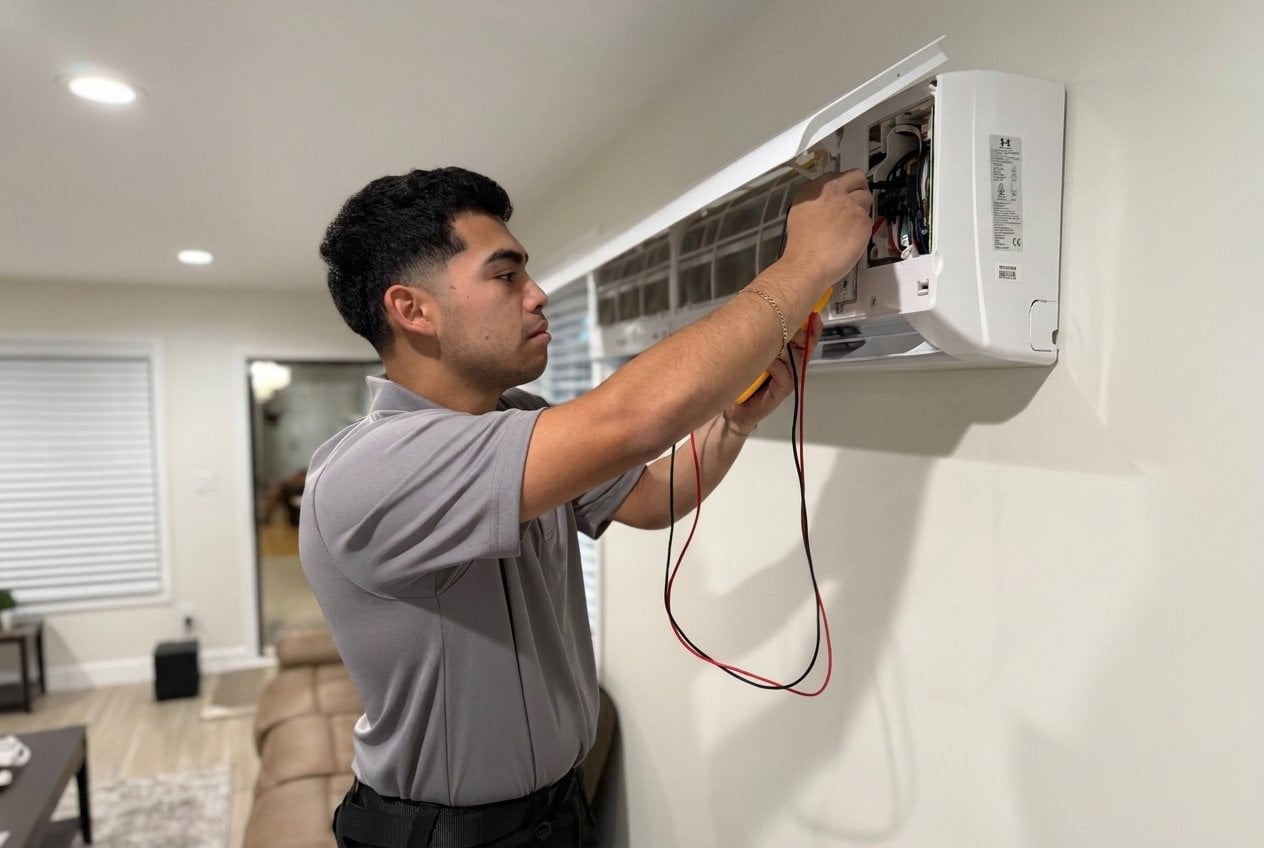
Is Restricted Airflow Preventing Proper Cooling?
Sometimes the AC is producing cold air, but that cooled air simply cannot move through the system effectively. Airflow restrictions are among the most common causes of poor cooling performance and often develop gradually enough that homeowners do not immediately notice the change.
Dirty air filters are the simplest example, but airflow issues can also involve blocked return vents, collapsed ductwork, dirty evaporator coils, failing blower motors, or closed supply registers. When airflow drops, the evaporator coil can become excessively cold and eventually freeze, creating an entirely new set of cooling problems.
Signs of Airflow Problems
- Weak airflow coming from supply vents
- Certain rooms cooling slower than others
- Ice forming on indoor refrigerant lines
- Increased system run times
- Higher energy bills
- Uneven temperatures throughout the house
Because airflow problems place additional strain on compressors, blower motors, and coils, addressing them early often prevents much more expensive repairs later.
Could the Outdoor Unit Be Causing the Problem?
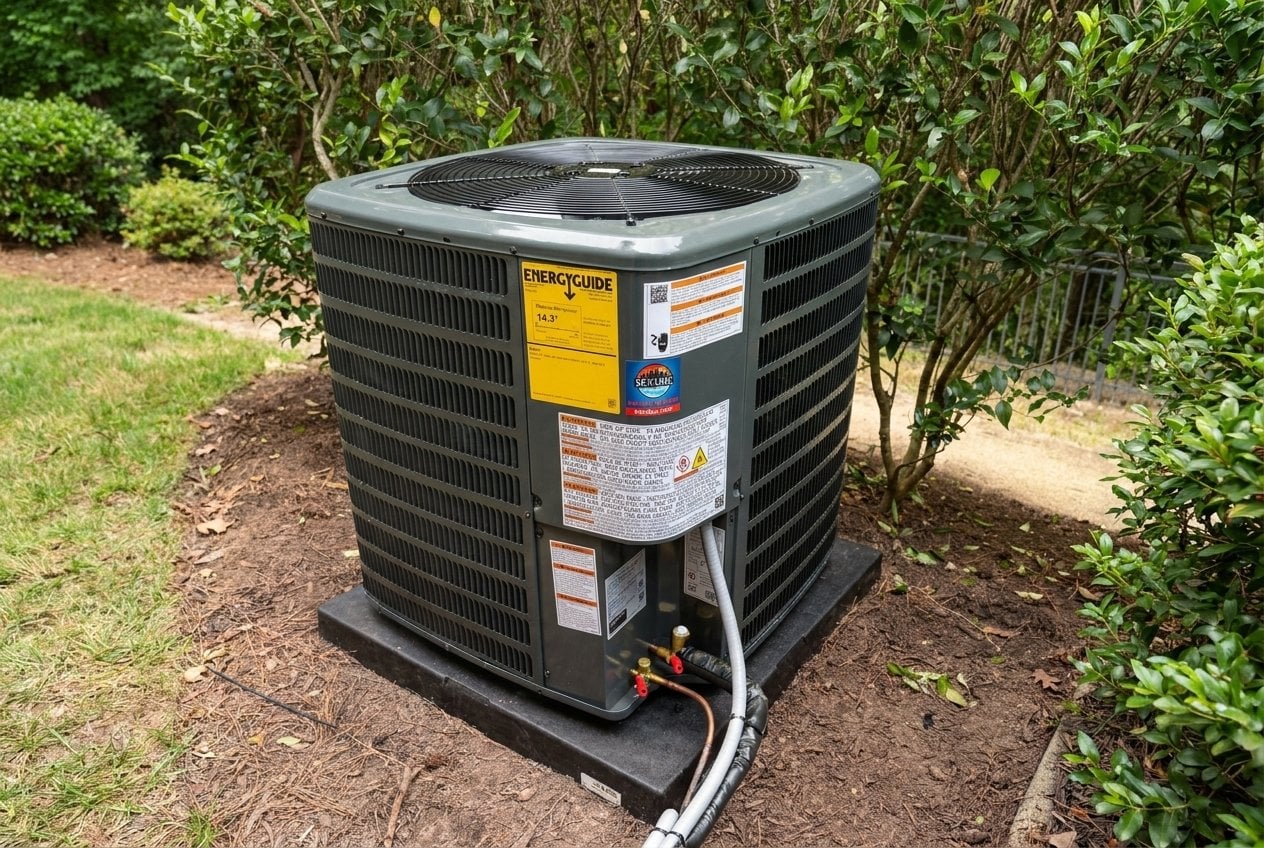
The outdoor condenser plays a critical role in the cooling process because it releases the heat removed from your home. If the condenser cannot discharge heat efficiently, the system’s cooling capacity drops dramatically, even though both the indoor and outdoor units may appear to be operating normally.
This is especially common in the Raleigh area, where spring pollen, cottonwood fluff, grass clippings, and summer debris can quickly coat the condenser coil. A dirty coil forces the compressor to work harder, raises operating pressures, and reduces efficiency. During a North Carolina heat wave, when temperatures regularly climb into the upper 80s and 90s, even a partially blocked condenser can make it difficult for the system to maintain a 72 to 75 degree indoor temperature.
Signs the Outdoor Unit May Be Struggling
| What You Notice | Possible Cause |
|---|---|
| Warm air from vents | Poor heat rejection outdoors |
| Outdoor unit unusually loud | Compressor working harder |
| Higher electric bills | Reduced operating efficiency |
| AC runs constantly | System cannot shed heat effectively |
| Outdoor coil visibly dirty | Airflow restriction across condenser |
A professional AC maintenance visit often includes condenser cleaning, coil inspection, electrical testing, and airflow verification to prevent these issues before peak summer arrives.
When Should You Call for Professional AC Repair?
Some cooling problems have simple causes, but others require immediate attention to prevent larger and more expensive failures. When an AC is running but not cooling properly, the issue is often affecting more than one part of the system. Knowing which warning signs indicate a need for professional diagnosis can help homeowners avoid compressor damage, water leaks, and rising energy costs.
Ice on Refrigerant Lines or the Indoor Coil
Ice formation is never normal during cooling season. It often signals restricted airflow, low refrigerant levels, or a refrigerant leak. While the system may continue running for a while, the ice prevents proper heat transfer and can eventually place significant strain on the compressor, one of the most expensive components in the system.
Water Leaks Around the Indoor Unit
In Raleigh’s humid climate, air conditioners remove gallons of moisture from indoor air every day. If water begins pooling around the air handler or dripping from the drain pan, a clogged condensate line or failed drain component may be preventing proper drainage. Ignoring the issue can lead to water damage, mold growth, and emergency shutdowns.
Warm Air and Longer Cooling Cycles
If the thermostat is set to 72 degrees but the home struggles to stay below 78 degrees, the system is likely dealing with a refrigerant, airflow, or mechanical problem. Air conditioners that run for hours without reaching the desired temperature consume significantly more electricity while delivering less comfort.
Unusual Noises or Sudden Energy Bill Increases
Buzzing, hissing, clicking, or rattling sounds often indicate electrical problems, refrigerant leaks, failing motors, or loose components. Similarly, a noticeable increase in your utility bill without changes in usage usually signals declining efficiency somewhere within the system. Addressing these symptoms early often prevents secondary damage to blower motors, coils, and compressors.
These warning signs are also a reminder that who diagnoses the problem matters just as much as the repair itself. An experienced HVAC contractor can identify the root cause, explain your options clearly, and help you avoid paying for unnecessary parts or repeat service calls.
Why Choose Skyline Comfort Services for AC Repair in Raleigh, NC?
When your AC is running but not blowing cold air, finding the root cause is more important than simply replacing parts. Problems like refrigerant leaks, clogged condensate drains, frozen coils, and airflow restrictions can create similar symptoms but require very different solutions.
At Skyline Comfort Services, we take an honest diagnostic approach by evaluating airflow, refrigerant performance, drainage systems, electrical components, and overall system condition before recommending repairs. That helps homeowners avoid unnecessary expenses and make informed decisions about their HVAC system.
If your air conditioner is blowing warm air, running constantly, or struggling to keep up with Raleigh’s summer heat, our team is here to help. Whether you need professional AC repair, routine air conditioning maintenance, or guidance on an AC replacement, we provide reliable solutions focused on long-term comfort and value.
Keep Reading
More Honest HVAC Guides
Still Not Sure What's Wrong?
Let an owner take a look, not a call center.
If your AC is running but the house won't cool, we'll diagnose it honestly and explain every option before any work begins, across Raleigh, Durham, Wake Forest, Cary, and the Triangle.