 Skyline Comfort Services
Yes. North Carolina's long cooling season and mild winters fit how heat pumps work almost perfectly, and modern variable-speed systems keep heating efficiently well below freezing. For the few coldest nights, a dual-fuel setup pairs the heat pump with a gas furnace as backup.
For years, many homeowners assumed heat pumps were best suited for warmer southern climates and could not handle real winter weather. That perception made sense decades ago when older heat pump technology struggled during colder temperatures. Modern systems, however, have changed dramatically.
Today, heat pumps are one of the fastest-growing HVAC options across North Carolina. The reason is simple: the state’s climate aligns remarkably well with how heat pumps operate. Raleigh, Durham, Cary, and much of central North Carolina experience long cooling seasons, moderate winters, and relatively few periods of extreme cold. Those conditions allow modern heat pumps to operate efficiently throughout much of the year while providing both heating and cooling from a single system.
Why Is North Carolina Considered a Good Climate for Heat Pumps?
The effectiveness of a heat pump depends largely on outdoor temperatures. Unlike a furnace that generates heat through combustion, a heat pump transfers existing heat from one place to another. During summer, it removes heat from your home. During winter, it extracts heat from outdoor air and moves it indoors.
This process becomes especially effective in climates that experience moderate winters rather than extended periods of sub-freezing temperatures. That is exactly where much of North Carolina falls.
Typical Raleigh Climate Conditions
| Climate Factor | Impact on Heat Pump Performance |
|---|---|
| Long cooling season | Excellent heat pump efficiency |
| Winter highs often 45°F to 60°F | Ideal heating conditions |
| Limited extended freezes | Reduces supplemental heating needs |
| High summer humidity | Heat pumps provide effective cooling and dehumidification |
| Moderate annual temperature swings | Supports year-round operation |
Because Raleigh winters are generally much milder than those found in northern states, heat pumps spend most of the heating season operating within their most efficient temperature range.
How Does a Heat Pump Cool During North Carolina Summers?
Many homeowners are surprised to learn that a heat pump cools a home almost exactly like a traditional air conditioner. The same refrigeration cycle that powers central air conditioning is used inside a heat pump system.
During summer, the system absorbs heat from inside the home and transfers it outdoors. At the same time, it removes excess humidity, which is especially important during North Carolina’s long humid season. In Raleigh, where summer dew points frequently climb into the upper 60s and 70s, humidity control often affects comfort just as much as temperature.
Benefits During Summer Cooling Season
- Provides cooling performance similar to a traditional AC system
- Helps reduce indoor humidity levels
- Uses high-efficiency inverter technology on many modern models
- Operates quietly compared to older HVAC equipment
- Eliminates the need for separate cooling equipment
For homeowners replacing an aging air conditioner, a heat pump often delivers comparable cooling performance while adding heating capabilities that a standard AC system cannot provide.
Can a Heat Pump Really Handle North Carolina Winters?
This is often the biggest concern homeowners have when considering a heat pump. The good news is that modern systems perform very differently than older generations installed twenty or thirty years ago.
Today’s cold-climate heat pumps can continue producing usable heat well below freezing. Many variable-speed systems maintain strong performance even when outdoor temperatures fall into the 20s. Because most Raleigh-area winters spend relatively little time below those temperatures, heat pumps can often handle the majority of seasonal heating demand on their own.
Typical Heat Pump Performance by Temperature
| Outdoor Temperature | Heat Pump Performance |
|---|---|
| 40°F to 60°F | Extremely efficient heating |
| 30°F to 40°F | Strong heating output |
| 20°F to 30°F | Effective operation for most homes |
| Below 20°F | Supplemental heat may assist |
| Extreme cold events | Backup heating may activate |
For much of North Carolina, those lower temperature ranges occur only periodically rather than for weeks at a time. That is one reason heat pumps continue gaining popularity across Raleigh, Cary, Apex, Wake Forest, and surrounding communities.
What Makes Modern Heat Pumps Different From Older Models?
One reason heat pumps have become so popular recently is the advancement of inverter-driven technology. Older systems generally operated at full capacity or not at all, creating larger temperature swings and reduced efficiency during colder weather.
Modern variable-speed heat pumps continuously adjust their output based on the home’s heating and cooling needs. Instead of repeatedly cycling on and off, the system can run at lower speeds for longer periods, improving efficiency, comfort, humidity control, and temperature consistency.
Improvements Found in Today’s Heat Pumps
- Variable-speed compressors
- Enhanced cold-weather performance
- Better humidity management
- Lower operating costs
- Quieter indoor and outdoor operation
- Improved energy-efficiency ratings
These advancements are a major reason many HVAC professionals now consider heat pumps one of the most practical year-round comfort solutions for North Carolina homeowners.
When Should a Homeowner Consider a Dual-Fuel System?
While heat pumps work exceptionally well throughout most North Carolina winters, some homeowners prefer having a secondary heating source available during the coldest weather. This is where a dual-fuel system can be an attractive option.
A dual-fuel system combines a heat pump with a gas furnace. During mild and moderate temperatures, the heat pump handles heating because it operates very efficiently. When temperatures drop to a predetermined point, typically during the coldest winter nights, the system automatically switches to the furnace.
How Dual-Fuel Systems Operate
| Outdoor Conditions | Primary Heating Source |
|---|---|
| Mild winter weather (40°F+) | Heat Pump |
| Cool winter temperatures (30°F to 40°F) | Heat Pump |
| Colder winter nights | Heat Pump or Furnace depending on settings |
| Extreme cold events | Gas Furnace |
This approach allows homeowners to benefit from the efficiency of a heat pump while maintaining the heating capacity of a furnace when needed. It is often a strong option for homeowners already connected to natural gas who want to maximize efficiency without giving up traditional heating performance.
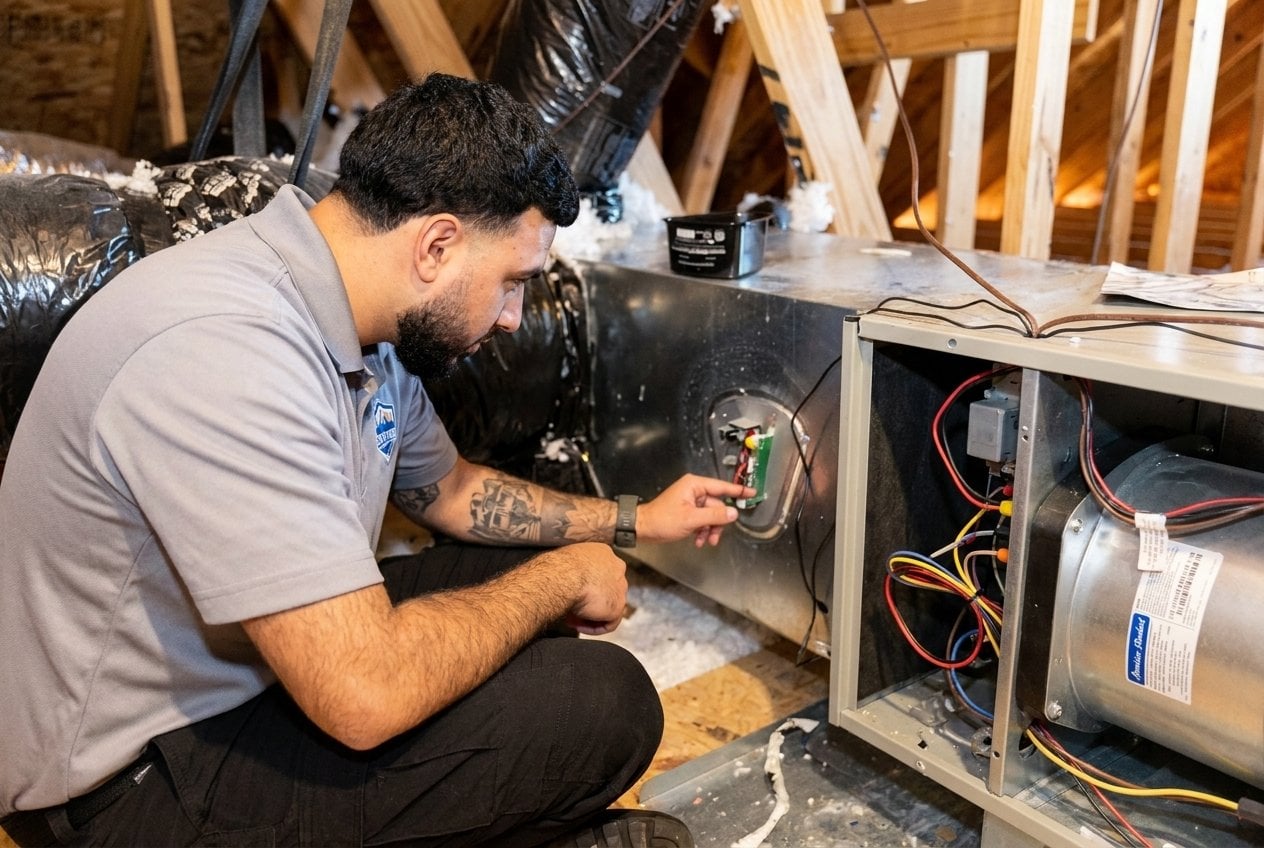
The best HVAC system is the one that fits your climate, home, and comfort goals.
Can Heat Pumps Qualify for Duke Energy Rebates and Incentives?
One reason heat pumps have become increasingly popular in North Carolina is that many high-efficiency models may qualify for utility incentive programs and energy-efficiency rebates. Because heat pumps provide both heating and cooling while using electricity efficiently, they often align well with utility energy-reduction goals.
Eligibility requirements vary by program and may depend on factors such as efficiency ratings, equipment type, and installation specifications. Higher-efficiency systems typically provide the strongest opportunity for rebate qualification.
Potential Financial Advantages of a Heat Pump Upgrade
- Lower annual heating and cooling costs
- Eligibility for certain utility incentive programs
- Reduced energy consumption compared to older HVAC systems
- Potential financing opportunities for qualified homeowners
- Long-term operating savings through improved efficiency
For homeowners already considering an air conditioning replacement or complete HVAC upgrade, available rebates can make a heat pump an even more attractive option when comparing long-term ownership costs.
Why Choose Skyline Comfort Services for Heat Pump Installation in Raleigh, NC?
The best HVAC system is the one that fits your climate, home, and comfort goals. Because North Carolina experiences long cooling seasons, moderate winters, and relatively few extended freezing periods, many homeowners find that a heat pump delivers an excellent balance of efficiency, comfort, and year-round performance.
At Skyline Comfort Services, we help homeowners evaluate whether a heat pump installation, dual-fuel system, or traditional HVAC replacement makes the most sense for their property. Our team considers insulation levels, ductwork condition, utility costs, equipment efficiency, and available rebate opportunities before making recommendations.
Whether you’re exploring a new heat pump installation, comparing options during an AC replacement, or looking for ways to lower long-term energy costs, we provide honest guidance and solutions designed specifically for North Carolina homes.
Keep Reading
More Honest HVAC Guides
Thinking About a Heat Pump?
Find out if a heat pump fits your home.
We'll look at your insulation, ductwork, and utility costs, then tell you honestly whether a heat pump or dual-fuel system is the right call, across Raleigh, Durham, Wake Forest, Cary, and the Triangle.