 Skyline Comfort Services
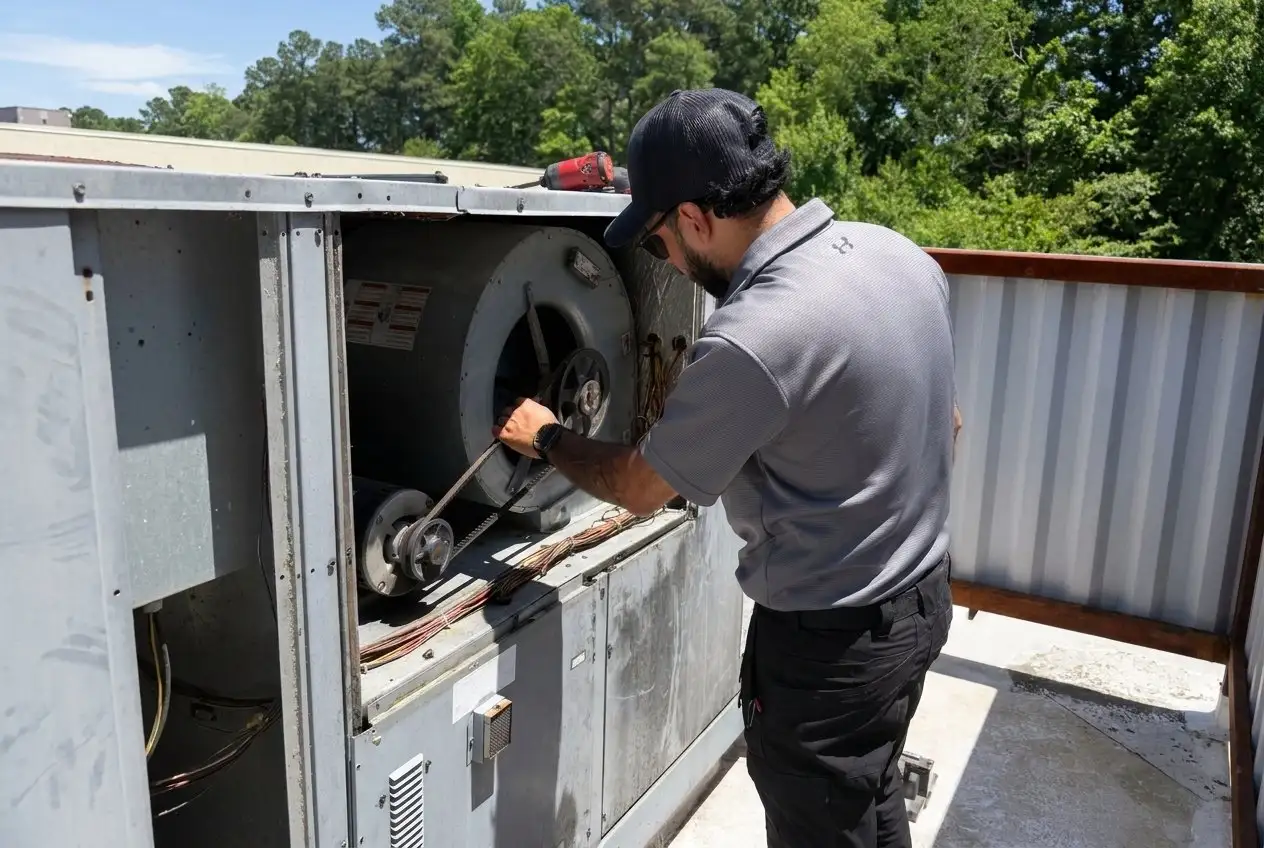
Duke Energy’s Raleigh-area rebates focus more on electric upgrades like heat pumps than stand-alone gas furnaces. If you have natural gas, your rebate may come through Enbridge Gas North Carolina instead. Either way, confirm eligibility with your specific utility before you buy, because incentives change and requirements vary by equipment and program.
You are staring at a quote to replace an aging furnace before the first cold snap, and somewhere in the sales pitch the word rebate came up. Now you want to know whether Duke Energy will actually cut you a check, how much, and whether the unit you are about to buy even qualifies. Get that wrong and you either leave money on the table or lock yourself into equipment that does not pay back.
Duke Energy’s Raleigh-area HVAC incentives are generally more relevant to qualifying electric upgrades such as heat pumps than to stand-alone gas furnaces. If your home uses natural gas, a furnace rebate may instead come through your gas utility, such as Enbridge Gas North Carolina, depending on the equipment and current program rules. Because incentives change, confirm eligibility with the utility serving your address before you sign and keep the exact model and efficiency documentation for any claim.
Does Duke Energy Offer a Furnace Rebate in Raleigh?
Duke Energy operates HVAC rebate and incentive programs in the Raleigh area, but a stand-alone gas furnace is not usually the main focus. Duke’s current incentives are more closely tied to qualifying electric efficiency upgrades, while homeowners served by Enbridge Gas North Carolina may find separate rebates for qualifying high-efficiency gas furnaces.
Many Raleigh-area homes are served by Duke Energy Progress, but rebate eligibility depends on the utility account for the specific address. A rebate advertised by another provider or an outdated national article may not apply to your home, so start with the current program listings for the utility that serves you.
Before you take any quoted figure at face value, it helps to see rough estimates for your own situation. A current rebate estimate for your equipment and account gives you a baseline to check the sales number against. From there, the real work is separating the different kinds of savings people lump together under one word.
Rebate, Tax Credit, or Manufacturer Deal? They Are Not the Same
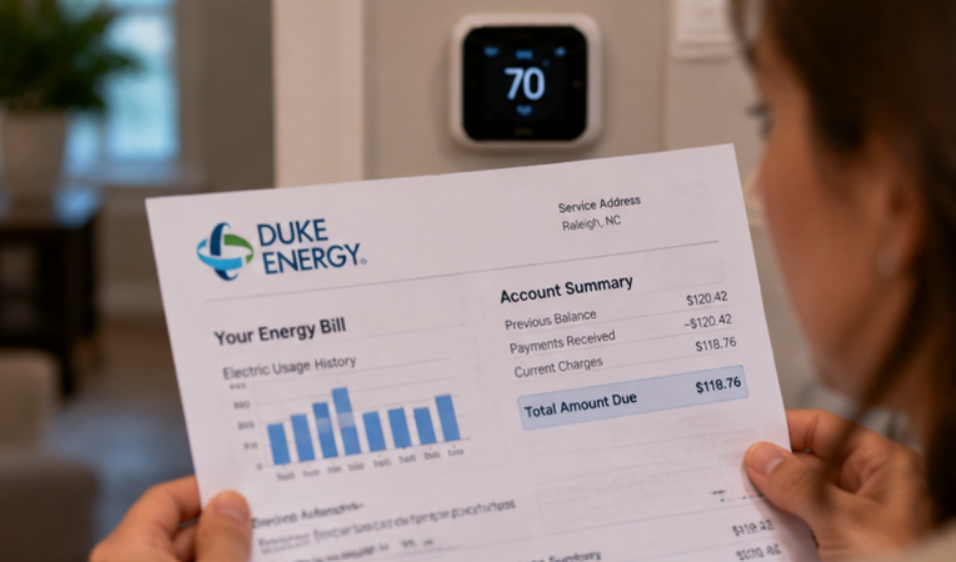
The word rebate gets used for three completely different things, and confusing them is the single most common mistake homeowners make when they sit down to do the math. A utility rebate, a federal tax credit, and a manufacturer promotion come from different places, arrive on different timelines, and follow different rules.
Here is how they actually differ:
| Savings type | Who administers it | How you get it | Why the difference matters |
|---|---|---|---|
| Utility rebate | Duke Energy | Reduces your cost directly, often applied or mailed after install | Tied to specific qualifying equipment and current program funding |
| Federal tax credit | IRS | The former HVAC credit ended for qualifying equipment placed in service after December 31, 2025 | Do not count this credit toward a new 2026 HVAC project |
| Manufacturer incentive | The equipment brand | Dealer discount or rebate at purchase | Can end mid-season and is unrelated to utility or federal rules |
For a 2026 installation, focus on current utility and manufacturer incentives. The federal Energy Efficient Home Improvement Credit that previously covered qualifying HVAC equipment ended for property placed in service after December 31, 2025. Utility and manufacturer programs can still have separate paperwork and eligibility, so keep each incentive category separate when you compare quotes.
What Makes a Furnace Qualify for a Rebate?
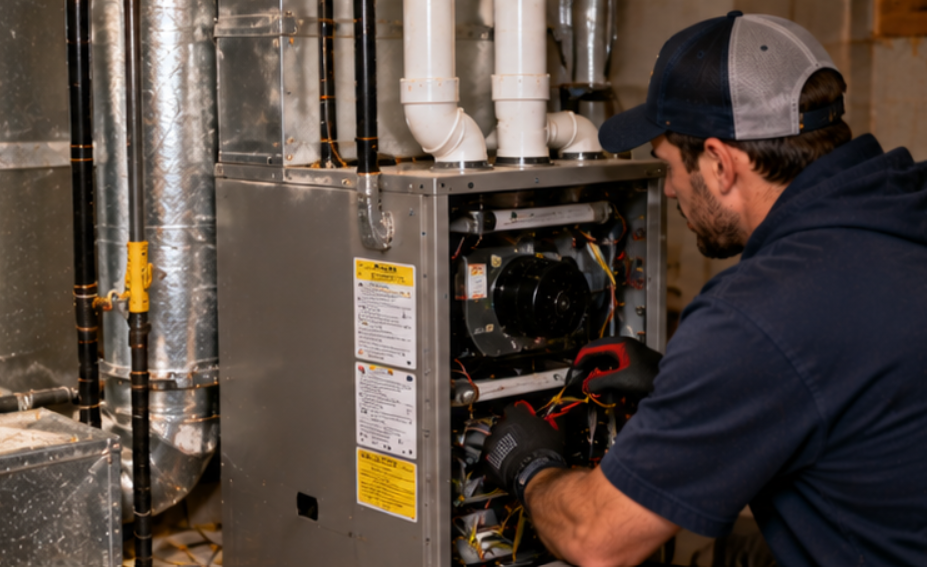
Furnace rebate eligibility depends on the equipment type, efficiency rating, and requirements of the specific incentive program. For Raleigh homeowners, the first step is confirming whether Duke Energy currently offers a rebate for qualifying gas furnaces or other heating equipment. Understanding the criteria before purchasing can help prevent unexpected costs.
AFUE Ratings and Furnace Efficiency
Annual Fuel Utilization Efficiency (AFUE) measures how efficiently a furnace converts fuel into usable heat over a typical heating season. For example, an 80% AFUE furnace converts approximately 80% of its fuel energy into heat, compared with 96% for a 96% AFUE model. Higher AFUE ratings generally mean less fuel is wasted during operation.
ENERGY STAR Certification and Program Requirements
ENERGY STAR certification identifies equipment that meets defined energy-efficiency criteria. However, certification alone does not guarantee eligibility for a Duke Energy incentive. If a furnace rebate is available, the program may specify particular efficiency ratings, eligible equipment models, or other conditions. Check the current program requirements before choosing a furnace based on its ENERGY STAR label.
Federal Efficiency Standards and Rebate Eligibility
The U.S. Department of Energy establishes minimum efficiency standards for residential furnaces. Meeting those standards means equipment satisfies the applicable baseline requirements, but it does not automatically qualify for a utility rebate. Any available Duke Energy incentive may have additional conditions, so Raleigh homeowners should review the current eligibility criteria rather than assume every high-efficiency furnace qualifies.
Equipment Documentation and Model Verification
Rebate applications may require equipment model numbers, purchase invoices, or other installation records. Ask your HVAC contractor to identify the exact furnace being quoted and provide any documentation required by the applicable program. Verify the model against Duke Energy’s current eligibility information before signing the installation agreement, since a manufacturer’s reputation alone does not establish rebate eligibility.
Gas Furnaces and Electric Heat Pumps
Gas furnaces and electric heat pumps use different technologies and efficiency ratings, and incentive programs may treat them differently. A gas furnace’s AFUE rating cannot be compared directly with a heat pump’s SEER2 or HSPF2 ratings. Before selecting equipment, confirm whether an incentive applies to your preferred heating system and compare the total installation cost and operating expenses.
For Raleigh homeowners planning a heating upgrade, checking available incentives before choosing equipment can make budgeting easier. Use the Skyline Comfort Services rebate calculator to explore potential savings, then confirm the current incentive with the utility serving your address. Rebate availability, eligible equipment, and incentive amounts can change, so verify the terms before making your final decision.
Does a Heat Pump Change the Rebate Picture?
Often, yes, and in this climate it deserves a serious look. A heat pump moves heat rather than burning fuel, and because it runs on electricity, utility programs tend to favor it with larger and more reliable incentives than gas furnaces receive.
Mild winters here make a heat pump a practical primary heat source, so this is not a theoretical alternative. The local lows rarely demand the heavy backup heat that hurts heat-pump economics farther north.
Here is why the heat-pump path often comes out ahead on incentives:
- Stronger utility rebates: Electric efficiency programs usually carry higher incentive amounts than gas-furnace programs.
- Duke Energy incentives: Qualifying heat-pump upgrades may be eligible for current Duke Energy efficiency incentives even though the federal HVAC credit has ended.
- Thermostat pairing: A qualifying smart thermostat may add a companion incentive on top of the equipment rebate.
- Year-round use: The same unit cools in summer, spreading the value across both seasons.
None of this means a heat pump is automatically the right call for every home. Ductwork, insulation and your comfort preferences all factor in. If the incentives shift the payback enough to interest you, a heat pump installation assessment for your home is the way to price it against the furnace quote you already hold. Either way, the claiming process is where eligibility turns into money.
How to Apply for a Furnace Rebate in Raleigh, NC
Before submitting a furnace rebate application, confirm that Duke Energy currently offers an incentive for your specific equipment type. If a program applies, review its eligibility rules, application deadline, and documentation requirements before installation. Preparing the paperwork early can help prevent delays and reduce the risk of a claim being rejected.
Keep these documents ready if the program requires them:
- Equipment details: Exact furnace make, model number, and efficiency rating.
- Itemized invoice: Purchase price, installation date, and contractor details.
- Permit records: Documentation required for the installation under applicable local rules.
- Eligibility documentation: Any AHRI certificate or other equipment verification requested by the program.
- Completed application: Submitted by the homeowner or contractor, as specified in the program terms.
Ask your HVAC contractor which documents apply to your installation and who is responsible for submitting the claim. Do not assume that an AHRI certificate or permit is mandatory for every furnace rebate, because requirements vary by program and equipment type. Confirm eligibility with Duke Energy before signing the installation contract, and keep copies of all submitted paperwork for your records.
Why Choose Skyline Comfort Services for Furnace Replacement in Raleigh?
Replacing an aging furnace is an opportunity to compare heating options, evaluate efficiency, and understand the full cost of installation. Skyline Comfort Services helps Raleigh homeowners explore furnace replacement options based on their home’s heating needs and budget. Before choosing equipment, confirm whether Duke Energy offers a current incentive for the proposed furnace and what documentation may be required.
If replacement costs are a concern, review the available HVAC financing options in Raleigh to explore ways to spread out the expense. You can also use the Skyline Comfort Services rebate calculator to explore potential incentives. Treat any estimate as preliminary until you verify the current program terms and confirm that your equipment qualifies.
Planning a furnace replacement before colder weather arrives gives you time to compare equipment, review installation costs, and check available incentives. Contact Skyline Comfort Services at (919) 629-1084 or request a free quote to discuss your heating needs and replacement options.
Frequently Asked Questions
Is a Duke Energy rebate the same as the federal tax credit?
No. A utility rebate comes from the serving utility and follows that program’s rules. The federal Energy Efficient Home Improvement Credit that previously covered qualifying HVAC equipment ended for property placed in service after December 31, 2025, so it should not be counted toward a new 2026 installation.
How long does it take to receive a Duke Energy rebate after installation?
It varies by program, equipment type and year, and gas-furnace rebates specifically tend to be limited. There is no fixed figure to quote reliably because published amounts change annually. Confirm the current number for your account directly through Duke Energy before you install, rather than trusting a sales estimate or an old article.
Do I get a bigger incentive for a heat pump than a gas furnace?
Often, yes for Duke Energy customers. Duke’s current HVAC incentives are more closely tied to qualifying electric upgrades such as heat pumps, while gas-furnace rebates may come through a separate gas utility such as Enbridge Gas North Carolina. Compare both the equipment cost and the incentive that actually applies to your address.
Who files the rebate paperwork, me or the contractor?
It depends on the program. Some require the installing contractor to submit the documentation, including the AHRI certificate; others have the homeowner apply directly. Ask before the job starts so nobody assumes the other party handled it, which is a common way a legitimate claim quietly lapses.
When is the best time to replace a furnace?
Fall, before the December through February cold settles in. Replacing early avoids an emergency failure on the first cold night and gives you time to confirm rebate eligibility rather than rushing. It also lets you compare efficiency tiers calmly instead of taking whatever is available during a breakdown.
Ready to explore your options?
Get clarity on furnace rebates for your home.
Skyline Comfort Services serves the whole Raleigh-Durham area and can help you sort through rebate eligibility, financing, and heating choices. Contact us at (919) 629-1084 or request a free quote to discuss your replacement timeline and potential incentives.