 Skyline Comfort Services
An outside AC unit usually won't turn on because of a tripped breaker, a flipped disconnect switch, a bad capacitor, a failed contactor, or a loose electrical connection. Start with the easy checks: thermostat settings, breaker, outdoor disconnect, and air filter. If the unit still won't start, or you hear humming or clicking without the fan spinning, it's time to call a technician instead of repeatedly resetting the breaker, since that can lead to more expensive compressor damage.
When your thermostat says the AC is running, but the outside unit stays completely silent, your home can heat up quickly—especially during a Raleigh summer where afternoon temperatures often climb into the 90s with high humidity. Many homeowners immediately assume the entire air conditioner has failed, but that’s not always the case. In many situations, the problem is caused by a tripped breaker, faulty capacitor, thermostat issue, or another component preventing the outdoor condenser from starting.
Your outdoor AC unit is responsible for releasing the heat removed from inside your home. If it doesn’t turn on, the indoor blower may continue circulating air, but that air won’t be cooled. Understanding the most common causes can help you identify whether it’s a simple issue or time to schedule professional AC repair in Raleigh, NC before the problem leads to a more expensive breakdown.
What Should You Check First When the Outside AC Unit Won’t Turn On?
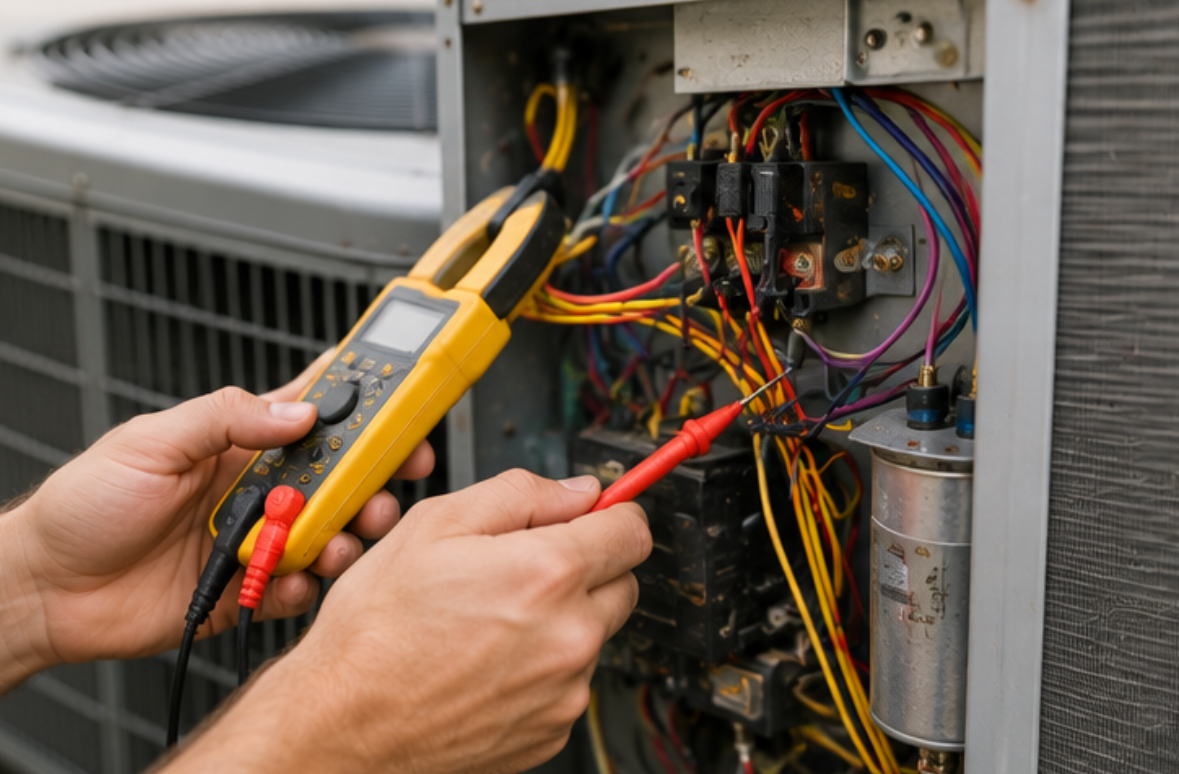
Before assuming a major repair is needed, there are several safe checks homeowners can perform. Many “no-start” service calls are caused by simple issues that can be identified within a few minutes without opening the equipment or handling electrical components.
| Quick Check | Why It Matters |
| Thermostat settings | Make sure it’s set to Cool and below the current room temperature. |
| Circuit breaker | A tripped breaker can shut off power to the outdoor unit. |
| Outdoor disconnect switch | Verify the disconnect near the condenser hasn’t been switched off. |
| Air filter | A severely clogged filter can contribute to system performance issues. |
| Listen for humming | A humming sound without the fan spinning often points toward a failed capacitor. |
If these checks don’t restore operation, avoid repeatedly resetting breakers or cycling the thermostat. Continuing to force the system to start can place additional strain on electrical components and lead to more expensive damage. Scheduling professional air conditioning repair early helps identify the root cause and restore safe, reliable operation before the problem worsens.
Could a Bad AC Capacitor Be Preventing the Unit From Starting?
Yes. A failed capacitor is one of the most common reasons an outside AC unit won’t turn on during North Carolina’s cooling season. The capacitor stores electrical energy and provides the extra boost needed to start the compressor and condenser fan motor. As capacitors age, repeated summer heat and long cooling cycles gradually reduce their ability to hold a charge.
Many Raleigh homeowners first notice the problem after several days of heavy AC use during a heatwave. The indoor blower may continue running while the outdoor condenser remains silent or struggles to start.
Common Bad AC Capacitor Symptoms
- Outdoor unit won’t start even though the thermostat is calling for cooling.
- AC fan not spinning while the compressor tries to start.
- Clicking or humming sounds coming from the outdoor unit.
- Intermittent operation, where the system works sometimes but not others.
- Breaker trips when the condenser attempts to start.
Because capacitors store electrical energy even after the power is turned off, replacement should always be performed by a qualified technician. Scheduling professional AC repair in Raleigh, NC helps confirm whether the capacitor is the problem or if another electrical component has failed.
Why Is the AC Fan Not Spinning Even Though the System Has Power?
If the outdoor unit has electrical power but the condenser fan isn’t spinning, the system cannot release heat effectively. This causes cooling performance to drop rapidly and may eventually overheat the compressor if the problem isn’t addressed promptly.
Several different issues can prevent the fan from operating correctly.
| Possible Cause | How It Affects the Outdoor Unit |
| Failed capacitor | Prevents the fan motor from receiving the starting boost it needs. |
| Worn condenser fan motor | The fan cannot rotate even though power is available. |
| Loose electrical connection | Interrupts power reaching the fan motor. |
| Contactor failure | Prevents electricity from reaching the outdoor components. |
| Debris restricting the fan blade | Stops the fan from rotating freely. |
A condenser fan that isn’t spinning should never be ignored. Continuing to run the system can place excessive stress on the compressor, often turning a relatively minor repair into a much more expensive one. Having an experienced air conditioning contractor inspect the system early can help identify the root cause and restore safe operation before further damage occurs.
Can a Tripped Breaker or Faulty Contactor Stop the Outside AC Unit?
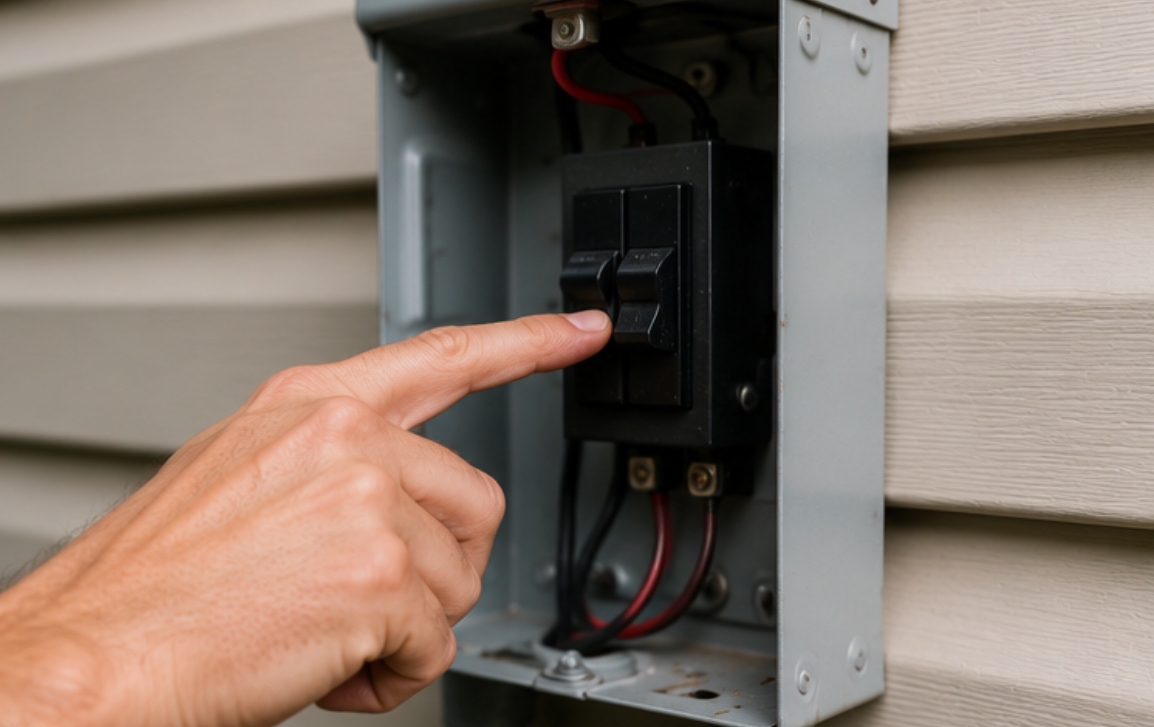
Not every outdoor AC failure is caused by a bad capacitor. The condenser also depends on a properly functioning circuit breaker, disconnect switch, and contactor to receive power. If any of these components fail, the outside unit won’t start even though the thermostat appears to be working normally.
Tripped Circuit Breaker
A breaker may trip because of a temporary electrical surge or an underlying problem such as a failing compressor or condenser fan motor. Resetting it once is reasonable, but if it trips again, the system should be inspected instead of repeatedly resetting the breaker.
Faulty AC Contactor
The contactor acts like an electrical switch between your thermostat and the outdoor unit. Over thousands of cooling cycles, its contacts can become worn or pitted, preventing power from reaching the compressor and fan motor even when the thermostat calls for cooling.
Loose Electrical Connections
Outdoor vibration, seasonal temperature changes, and years of operation can loosen electrical connections inside the condenser. These issues often cause intermittent starting problems before the unit stops working completely.
Professional Electrical Testing
Many electrical problems produce similar symptoms, making them difficult to identify without proper testing. During a professional air conditioning repair visit, technicians test voltage, capacitance, contactors, and control circuits to pinpoint the exact failure and recommend the correct repair instead of replacing parts through trial and error.
Early diagnosis of electrical issues often prevents additional damage to expensive components like the compressor and helps restore reliable cooling before a minor problem becomes a major repair.
How Do HVAC Technicians Diagnose an Outside AC Unit That Won’t Turn On?
When the outdoor unit won’t start, experienced technicians follow a systematic diagnostic process instead of assuming the capacitor has failed. This approach helps identify the actual cause while preventing unnecessary parts replacement.
| Professional Diagnostic Test | Why It’s Performed |
| Thermostat signal verification | Confirms the outdoor unit is receiving a cooling call. |
| Capacitor testing | Measures capacitance against the manufacturer’s rated value. |
| Contactor voltage test | Verifies power is reaching the condenser components. |
| Compressor amp draw | Identifies locked or failing compressors before major damage occurs. |
| Condenser fan motor inspection | Confirms the motor starts and operates within specifications. |
During peak summer in Raleigh, technicians frequently find multiple developing issues rather than a single failed component. For example, a weak capacitor may have placed additional strain on the condenser fan motor for weeks before the unit finally stopped operating. Identifying every contributing issue helps improve long-term reliability instead of simply restoring temporary operation.
Should You Repair the Problem Immediately or Wait?
When the outdoor condenser stops running, delaying repairs usually creates additional risk. Even if the indoor blower continues moving air, your home isn’t receiving cooled air, and indoor temperatures can climb quickly during North Carolina’s humid summers.
Ignoring the problem may also allow small electrical failures to damage more expensive components. For example, replacing a failed capacitor is typically far less expensive than replacing a compressor that has overheated after repeated unsuccessful start attempts. Acting early often reduces repair costs while helping prevent extended downtime during the busiest cooling season.
If your outside AC unit isn’t turning on after the basic homeowner checks, choosing an experienced AC repair service in Raleigh, NC ensures the system is diagnosed accurately, repaired safely, and returned to reliable operation before the problem becomes more costly.
Why Choose Skyline Comfort for AC Repair in Raleigh, NC?
When your outside AC unit won’t turn on, accurate diagnostics are just as important as the repair itself. At Skyline Comfort, we inspect the complete cooling system—including the capacitor, contactor, condenser fan motor, compressor, and electrical controls—to identify the root cause before recommending any repairs.
Backed by years of HVAC experience, North Carolina HVAC licensing, and EPA-certified technicians, we provide professional AC repair in Raleigh, NC with honest recommendations and quality workmanship. Whether you need a capacitor replacement, help diagnosing an AC fan that’s not spinning, or expert repairs for an outdoor unit that won’t start, our team is committed to restoring your comfort quickly and correctly.
If your air conditioner stops working during a Raleigh heatwave, don’t wait until the problem becomes more expensive. Contact Skyline Comfort today for a professional diagnosis and expert AC repair that keeps your home cool all summer long.
Why Choose Skyline Comfort Services for AC Repair in Raleigh, NC?
When your outdoor unit won’t start, we don’t guess at parts. We check the capacitor, contactor, condenser fan motor, compressor, and electrical connections to find the actual cause before we recommend a repair. That means you’re paying to fix what’s actually wrong, not replacing parts through trial and error.
We’re an owner-operated shop, so the person diagnosing your system is invested in getting it right the first time. Whether it’s a worn capacitor, a tripped breaker that keeps tripping, or a fan that won’t spin, we’ll walk you through what we find and what it takes to get your home cooling again.
Outdoor Unit Won't Start?
Let's Get Your AC Running Again
If the basic checks didn't fix it, don't keep resetting the breaker. Skyline Comfort will test the capacitor, contactor, and electrical controls to find the real cause and get your outdoor unit back up safely, anywhere in the Triangle.