 Skyline Comfort Services
Your gas furnace is getting older, your air conditioner is nearing the end of its service life, and another heating season has you thinking about replacement options. Should you install another furnace, or switch to a heat pump that can handle both heating and cooling? For Raleigh homeowners, this decision is worth considering because winters are generally mild enough for modern heat pumps to handle much of the heating demand without relying heavily on backup heat.
For many Raleigh homes, replacing an aging furnace with a properly sized heat pump can be a smart long-term investment. However, the best choice depends on your current equipment, electricity and natural gas rates, electrical panel capacity, and the home's heating requirements. If your furnace still has years of reliable service left or natural gas costs less to use, repairing it or choosing a dual-fuel system may make more financial sense. Here's what to consider before making the switch.
Is Your Furnace at the Point Where Replacing It Makes Sense?
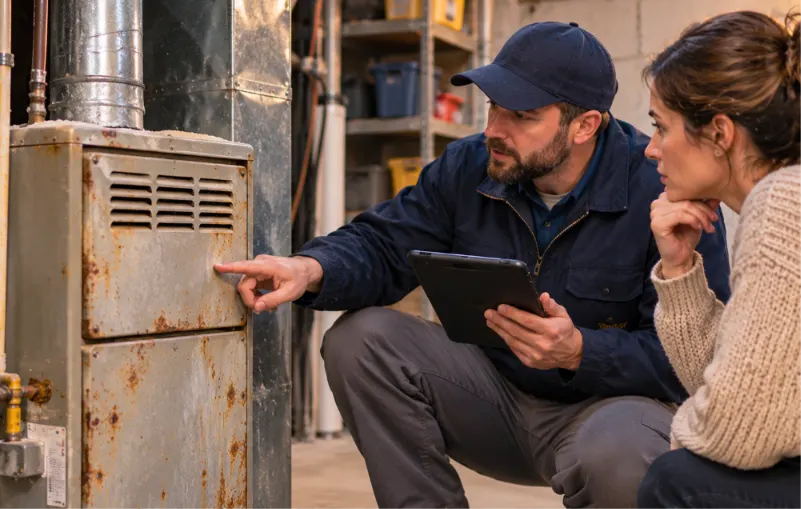
ENERGY STAR suggests considering furnace replacement when a system is more than 15 years old and needs repairs. However, age alone does not determine whether replacement is necessary. The type of failure, repair cost, heating performance, and overall condition all matter. A relatively minor repair may be worthwhile on an older furnace, while a major component failure can make replacement the more practical investment.
Frequent Repairs Are Adding Up
If your furnace needs service repeatedly, the repair bills can become more expensive than maintaining an aging system is worth. Frequent breakdowns, inconsistent heating, and recurring ignition or blower problems may indicate that several components are reaching the end of their service life. Compare the expected repair costs with the price of a replacement.
A Major Component Has Failed
Some furnace problems are more serious than others. A cracked heat exchanger can create a carbon monoxide safety risk and may make replacement necessary. A failed control board or another expensive component on an older furnace can also make a repair difficult to justify, particularly when other parts show significant wear.
If your furnace is approaching the end of its expected lifespan, consider the long-term cost of keeping it rather than focusing only on the immediate repair. A professional heating installation can help you compare replacement options, understand available equipment choices, and plan for more reliable heating before your existing system stops working.
How Does a Heat Pump Heat Without Burning Fuel?
A gas furnace makes heat by burning fuel. A heat pump moves heat that already exists in the outdoor air into your home, using refrigerant and a compressor. Even 35-degree air holds usable heat, and the system collects it and releases it indoors through the air handler.
Heat pumps can use substantially less electricity than electric resistance heating because they move heat instead of generating it directly. According to the U.S. Department of Energy, air-source heat pumps can cut electricity use for heating by about 50% compared with electric resistance heat. How that compares with gas depends on your local electric and natural gas rates.
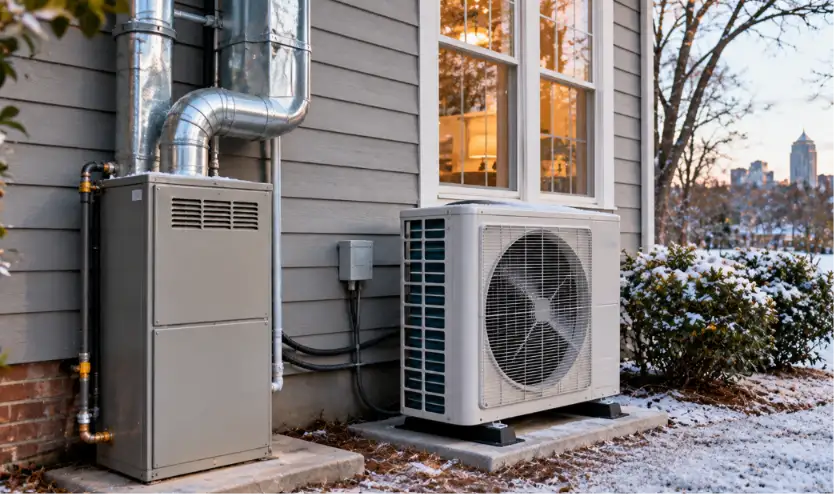
The same equipment runs in reverse in summer and cools the house. In an all-electric conversion, a heat pump can provide both heating and cooling in place of a furnace-and-AC setup. In a dual-fuel system, the heat pump replaces the air conditioner while the gas furnace remains as backup heat.
How Well Do Heat Pumps Handle a Raleigh Winter?
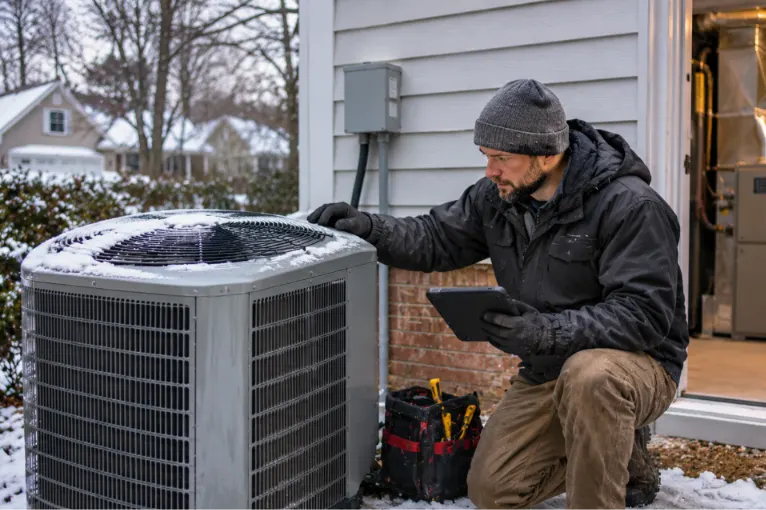
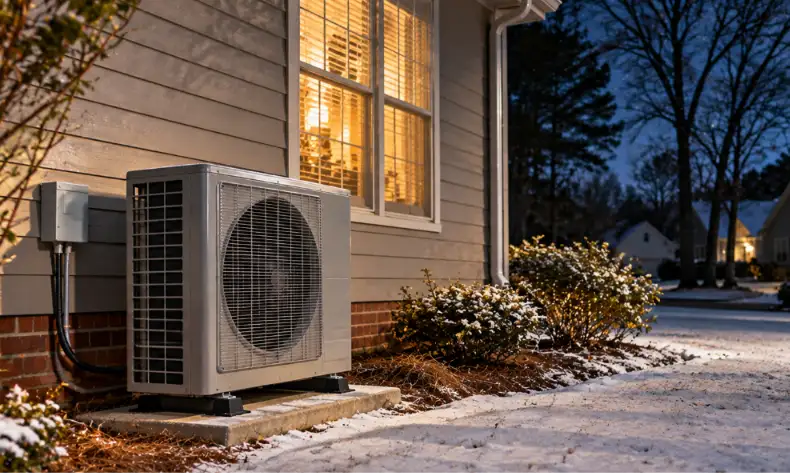
Very well, for much of the season. NOAA's 1991 to 2020 normals put Raleigh's average January low at about 32°F and the average high at about 52°F, with roughly 18 January nights at or below freezing.
Deeper cold snaps do occur, so low-temperature capacity and backup-heat design still matter. During colder conditions, some systems may need auxiliary electric heat, while dual-fuel systems can switch to the gas furnace based on their controls and balance-point setup.
That is why sizing matters. A heat pump sized to the house can handle more of the heating load without relying heavily on backup heat, while an undersized system may use auxiliary heat more often.
What Decides Whether a Heat Pump Is the Right Replacement?
The climate settles whether a heat pump can work in Raleigh. Your house and your bills settle whether it is the right choice for you. These five factors tip most decisions, and a good estimate should cover every one of them before anyone talks about brands or efficiency tiers.
The Age of Your Air Conditioner
If the air conditioner is also aging, inefficient, or facing a major repair, replacing both systems with one heat-pump installation can make more sense. If the air conditioner is still relatively new and performing well, replacing just the furnace, or planning a heat pump later, may avoid retiring good equipment early.
Your Gas and Electric Rates
A heat pump's running cost depends on what you pay for electricity compared with natural gas. Look at your Duke Energy and gas bills before deciding. In homes with low gas rates, a dual fuel system that uses gas on the coldest nights can keep winter costs down.
Your Ductwork
Existing ductwork should be checked for airflow, leakage, and sizing because heat-pump supply temperatures and airflow requirements differ from those of many gas furnaces. Some homes may need duct sealing or airflow modifications as part of the conversion.
Your Electrical Panel
The outdoor unit, air handler, and any electric auxiliary heat must have the electrical capacity and circuits required by the equipment. Many older Raleigh homes were wired around a gas furnace, so the panel should be checked during the estimate and may need additional work.
How Long You Plan to Stay
A higher-efficiency heat pump usually costs more up front. If you plan to stay long term, compare that added cost with estimated operating savings rather than choosing an efficiency tier by rating alone.
The takeaway is that a heat pump can be a strong option for many Raleigh homes, but not automatically for yours. The right choice comes from the combined picture: equipment condition, heating load, utility costs, ductwork, electrical capacity, and available incentives.
Should You Wait for the Furnace to Fail Before Deciding?
Plenty of homeowners plan to run the old furnace until it quits, then decide. It feels economical, because every extra month of service from equipment you already own seems like money saved, and the replacement question can wait until the furnace forces it.
Here is the trap. A furnace that fails in January turns a planned decision into an emergency. There is little time to compare systems, size the house or line up rebate requirements, and the cheapest option on the day often wins over the right one for the next 15 years.
Plan the replacement while the furnace still runs. A mild stretch in late fall or early spring is the easiest window. You can take time to compare a heat pump with dual fuel, confirm rebate eligibility and schedule the work without a cold house waiting on the decision.
How Do the Three Replacement Options Compare?
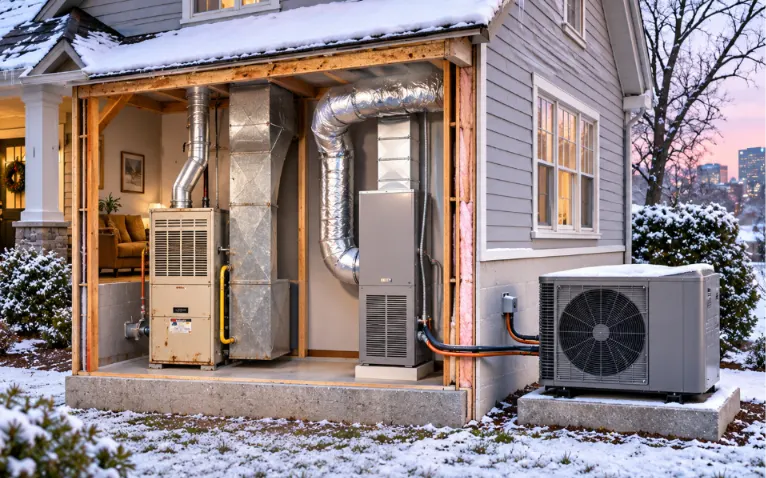
Most Raleigh homeowners replacing a furnace end up choosing among three setups. The table below compares them on how they heat, which homes they suit best and what to watch for, so you can narrow the choice before you sit down with an estimate:
| Option | How it heats | Best for | Watch out for |
|---|---|---|---|
| Heat pump with electric backup | Heat pump most hours, electric strips on the coldest nights | Aging AC, no gas or high gas rates | Undersizing leads to heavy strip heat use |
| Dual fuel | Heat pump in mild weather, gas furnace on the coldest nights | Homes with gas service | Two systems to maintain |
| New gas furnace and AC | Gas furnace all winter, separate AC in summer | Low gas rates and a newer AC | No heating efficiency gain from the AC side |
Dual fuel deserves a closer look than it usually gets. A properly configured system can use the heat pump during milder weather and switch to the gas furnace when the controls call for it, reducing reliance on electric resistance backup heat.
What Incentives Apply in Raleigh Right Now?
Incentives have changed. The federal heat pump tax credit ended for systems placed in service after December 31, 2025, so a heat pump installed this winter does not qualify for it. Local programs may still help, but eligibility depends on the equipment and project:
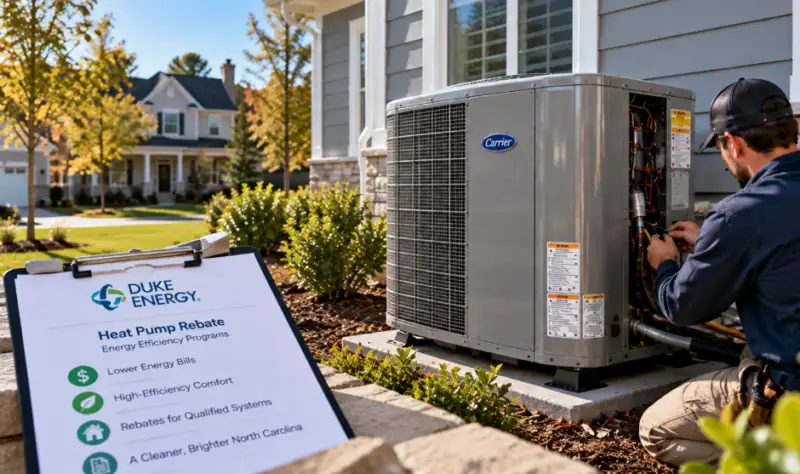
- Duke Energy rebates: Qualifying Raleigh-area heat-pump installations may receive utility rebates, with amounts and efficiency requirements varying by equipment and replacement type.
- Energy Saver North Carolina: Income-qualified households may still qualify for HOMES or HEAR incentives, but eligibility depends on the project. As of September 1, 2026, HEAR no longer allows rebates for switching directly from fossil-fuel heating to electric equipment.
Confirm eligibility before you sign. A guide to the Duke Energy heat pump rebate in Raleigh explains the program, its paperwork and its deadlines in more detail.
Which Path Fits Your Home?
Most decisions come down to the condition of both systems and the house around them. A heat pump makes the most sense when the furnace and air conditioner are both aging, while repair or dual fuel makes sense when one system still has years left to give.
Use these situations as a starting point, then confirm the choice with measurements of the house, the ductwork and the electrical panel. Those three checks decide sizing, cost and whether the system will deliver what the brochure promises once it is installed:
- Old furnace and old AC: A full heat-pump conversion is worth comparing with another furnace-and-AC system.
- Old furnace, newer AC: Replace the furnace, or plan a heat pump when the AC reaches replacement age.
- Gas service and a preference for keeping gas backup: Compare a dual-fuel system with an all-electric heat pump.
- Furnace under 15 years with a small repair: Repair it and plan ahead.
For more on how heat pumps perform locally, see whether a heat pump is a good choice for the North Carolina climate. If the furnace only needs a fix this season, a heating repair can buy you time to plan the switch properly.
Why Choose Skyline Comfort Services for a Furnace-to-Heat-Pump Switch in Raleigh?
At Skyline Comfort Services, we are a family- and minority-owned Raleigh company. Our founders, Jon Varela and Henry Amaya, bring more than 20 years of combined experience and stay hands-on in the business and on installations. We hold NC HVAC License L.37225 and EPA 608 certification.
Our free in-home estimate for a heat pump installation starts by measuring the house and reviewing the ductwork and electrical panel, then gives you written options, including dual fuel. We charge refrigerant by weight, pull the permit and handle the Duke Energy paperwork.
Financing through Service Finance Company is available, subject to credit approval, and we offer a 5% military discount. Call or text us at (919) 629-1084 to schedule a free estimate before the next cold snap tests your old furnace and forces a rushed decision.
Frequently Asked Questions
Can a heat pump be installed in the middle of winter?
Yes. A furnace-to-heat-pump changeout can be done any time of year, and installers try to schedule it on a milder day so the house is not without heat for long. Planning ahead lets you pick that day instead of waiting for the old furnace to fail.
Will my electric bill go up if I switch from gas to a heat pump?
Your electricity use will generally increase if the heat pump becomes your primary heat source, while gas use may decrease or disappear depending on whether you keep a furnace for dual fuel. Whether total energy cost goes down depends on utility rates, the home, the equipment, and how often backup heat runs.
What Is a Dual-Fuel System?
Dual fuel pairs a heat pump with a gas furnace. The heat pump heats the house in mild weather, and the furnace takes over on the coldest nights. It suits Raleigh homes with gas service, avoiding strip heat while keeping the heat pump's efficiency most of the winter.
Do I need new ductwork for a heat pump?
Not always, but the ducts should be checked. Heat pumps deliver steady, milder air, so leaky or undersized ducts can affect comfort and airflow. Whether sealing, modification, or replacement is needed depends on the condition and sizing of the existing duct system.
Can I still get a federal tax credit for a heat pump?
No. The federal heat pump tax credit ended for systems placed in service after December 31, 2025. Duke Energy rebates and, for income-qualifying households, Energy Saver North Carolina may still help. Confirm current amounts and requirements before you sign a contract.