 Skyline Comfort Services
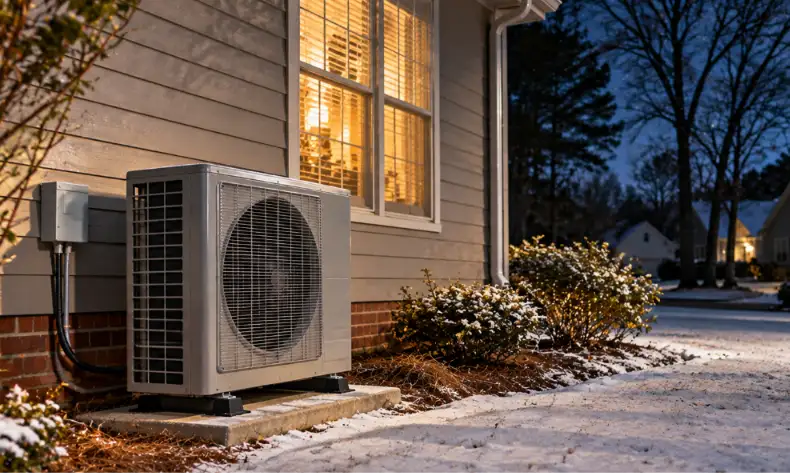
It can, but the result depends on the heat pump, thermostat settings, backup-heat controls, and how the home handles recovery. A small nighttime setback may reduce heat loss, but a larger morning recovery can bring on auxiliary heat and erase some or all of the savings.
That matters in Raleigh because winter conditions vary. NOAA's 1991 to 2020 normals show about 47 freezing nights from December through February, but outdoor temperature alone does not determine whether a setback will save energy.
Does Turning a Heat Pump Down at Night Save Money?
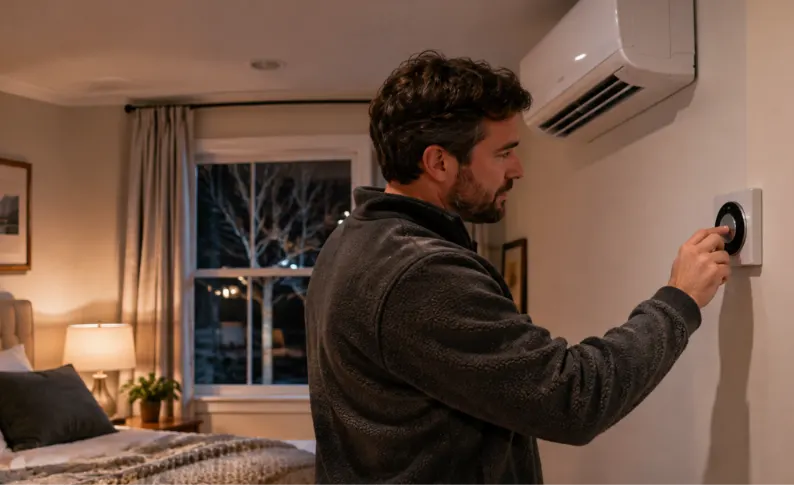
It can, but less than most people expect. The house loses less heat overnight when it is a few degrees cooler, so the heat pump does a little less work. That part of the savings is real with any heating system.
The catch comes at wake-up. Many ducted heat pumps use electric resistance heat as auxiliary backup, while dual-fuel systems use a furnace. If backup heat comes on during recovery, it can change the economics of a setback.
The Department of Energy warns about this. It says setting back a heat pump in heating mode can make it run inefficiently and cancel any savings from the lower setting. So the answer depends on how far you turn it down and how cold the night gets.
How Much Can a Nightly Setback Save?
General thermostat setback guidance does not translate into a fixed savings percentage for heat pumps. The result depends on how much the house cools, how the thermostat stages recovery, and whether auxiliary heat comes on.
A smaller setback may reduce overnight heat loss without creating a large recovery load, while a deeper setback can increase the chance that backup heat runs in the morning. For many homes, the most useful comparison is whether a setback reduces total energy use without causing frequent auxiliary heat.
When Does Turning It Down Cost More Than It Saves?
Electric resistance auxiliary heat generally uses substantially more electricity than normal heat-pump operation, so frequent auxiliary heat during morning recovery can erase potential setback savings.
The deeper the setback, the larger the recovery load. Whether backup heat comes on depends on the heat pump's available capacity, thermostat staging, control settings, and the home's heating load.
What Decides Whether Your Setback Saves Money?
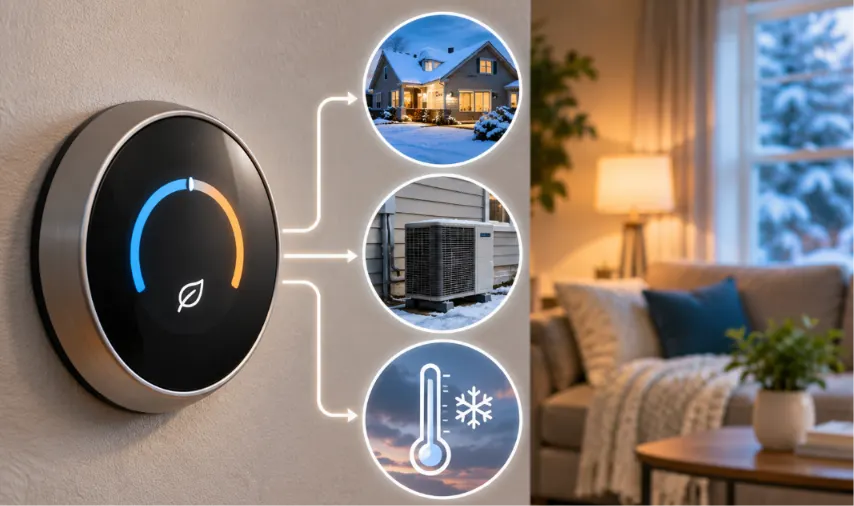
Whether a setback saves money depends on a handful of factors working together. These five decide most outcomes, and checking where your home falls on each one tells you whether to set back a little, set back on mild nights only or leave the thermostat alone.
How Far You Turn It Down
Smaller setbacks generally create less recovery demand, but whether auxiliary heat comes on depends on the equipment and thermostat controls. Larger setbacks create a bigger recovery load and are more likely to call for backup heat on some systems.
How Cold the Night Gets
Outdoor temperature affects available heat-pump capacity, but there is no universal freezing-point cutoff for setbacks. The exact behavior depends on the equipment, home heating load, and control settings.
How Your Thermostat Recovers
Some heat-pump-compatible smart or programmable thermostats use adaptive or gradual recovery to reduce unnecessary auxiliary heat. The feature must be supported by the equipment and configured correctly.
What Kind of Heat Pump You Have
Equipment staging can affect how smoothly the system recovers, but backup-heat use depends on more than whether the heat pump is single-stage, two-stage, or variable-speed. Thermostat logic, available capacity, and system settings matter too.
How Well the House Holds Heat
A tight, well-insulated house loses only a degree or two overnight, so the morning gap stays small. A drafty house cools quickly, widens the gap and pulls in more strip heat. Sealing air leaks lowers the bill no matter which thermostat strategy you choose.
Setbacks are most likely to help when recovery does not cause unnecessary auxiliary heat or inefficient high-power operation. If your schedule repeatedly brings on backup heat, a smaller setback or steadier temperature may work better.
How Do Different Setbacks Pay Off in Raleigh?
The same setback can save money one night and lose it the next, depending on the weather and the thermostat. The table below shows how common choices usually play out for a Raleigh heat pump, based on whether the morning warm-up stays on the compressor:
| What you do | What to watch |
|---|---|
| Hold a steady setting | Simple strategy that avoids setback recovery |
| Small setback | Watch whether AUX heat appears during recovery |
| Deep setback | Creates a larger recovery load and may trigger backup heat |
| Heat-pump-compatible smart schedule | May improve recovery control if configured correctly |
| Emergency Heat | Do not use simply to speed up morning recovery |
The useful pattern is not a single outdoor-temperature cutoff. Watch how your specific system handles recovery and whether auxiliary heat comes on more often after a setback.
Which Raleigh Nights Are Safe to Turn It Down?
NOAA's 1991 to 2020 normals show how often Raleigh nights drop to freezing. The counts change a lot through the season, so a setback that pays in November may not pay in January. These monthly averages show where the safe nights cluster:
- November: About 8 freezing nights, so most nights suit a small setback.
- December: About 15 freezing nights, roughly half the month.
- January: About 18 freezing nights, the riskiest month for setbacks.
- February: About 14 freezing nights, similar to December.
Raleigh has both mild and freezing winter nights, so one schedule may not behave the same way all season. Watch how your specific system handles recovery and auxiliary heat rather than using outdoor temperature alone as the rule.
How Can You Tell If Your Setback Is Costing You?

The thermostat can give you a useful clue. If it shows "AUX" or "AUX heat" most mornings during setback recovery, the schedule may be increasing electricity use. Occasional auxiliary heat can still be normal when the home needs additional capacity.
You can also test it on your own bill. Try two weeks with a small setback and two weeks at a steady temperature during similar weather, then compare the electricity use. These signs point to a setback that costs more than it saves:
- AUX shows every morning: The warm-up is running the strips.
- AUX on mild days: The thermostat's backup settings may be wrong.
- Usage rises after you start setting back: The recovery is costing more.
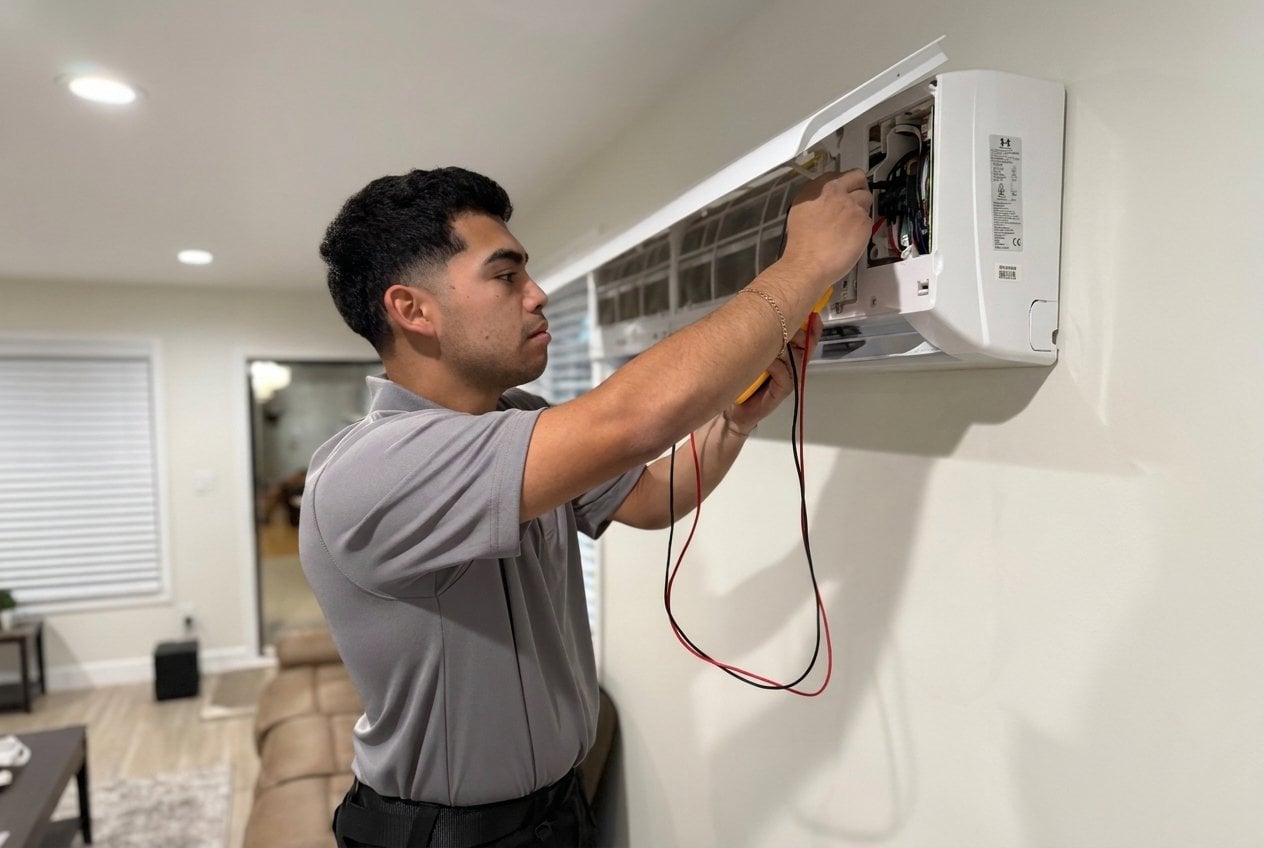
If AUX runs frequently even during milder weather, the cause could involve thermostat configuration, staging or control settings, airflow, defrost operation, equipment capacity, or a refrigerant-related issue. A heat pump repair visit can identify the cause.
Why Choose Skyline Comfort Services for Heat Pump Service in Raleigh?
At Skyline Comfort Services, Jon Varela and Henry Amaya stay hands-on in the business, backed by Skyline's own licensed technicians. Together, they bring more than 20 years of combined experience. We hold NC HVAC License L.37225 and EPA 608 certification.
If your heat pump leans heavily on auxiliary heat, we check the system and thermostat controls to determine why backup heat is running and whether the setback schedule is contributing to it. Our diagnostic is a flat $89, and you approve a written price before any repair begins.
Our maintenance plan includes two seasonal visits, coil cleaning, a drain-line flush, and a full system evaluation, with 10% off repairs, starting at $189 a year for the first system. A fall heat pump checkup covers the details. Call or text us at (919) 629-1084.
Frequently Asked Questions
How much does turning a heat pump down at night save?
There is no fixed percentage. Savings depend on the home, equipment, thermostat controls, and whether auxiliary heat runs during recovery. A setback that repeatedly triggers backup heat may save little or no energy.
Is it cheaper to leave a heat pump at one temperature?
Sometimes. A steady temperature avoids the recovery period that can bring on auxiliary heat, but some systems can handle modest setbacks efficiently. The best approach depends on the heat pump and thermostat settings.
What temperature should I set my heat pump to at night in Raleigh?
There is no single nighttime setting that works for every heat pump. If you use a setback, keep it modest and watch whether AUX heat appears during recovery. If backup heat runs frequently, try a smaller setback or a steadier setting.
Does a smart thermostat make a setback worth it?
It can help if it is compatible with the heat pump and configured for gradual or adaptive recovery. Those settings may reduce unnecessary auxiliary heat during warm-up.
Does turning the heat pump down while I'm at work save money?
The same principle applies. A larger setback creates a bigger recovery load, and some systems may bring on auxiliary heat when you return. Watch how your thermostat and heat pump handle recovery rather than relying on one fixed setback rule.
Keep Reading
More Honest HVAC Guides
 Heating Guide
Should You Schedule Heat Pump Maintenance Before Raleigh’s Fall Temperature Swings?
 Heating Guide
Is a Heat Pump a Good Choice for the North Carolina Climate?
 Heating Guide